
The World of Misperception: Irlen Colored Filters for Learning Disorders
Most people assume that once classic vision problems are corrected or ruled out, everyone perceives the world in the same way. We now know that perception can be different for some.
Sue, a fifth-grade student from a professional family, is having trouble in school. When given an assignment requiring reading, she daydreams, talks with friends, and looks around the room . . . anything but read. Sue also has trouble accurately copying work from the board and often leaves out letters, words, and even sentences. She complains that words don’t stay still and that numbers disappear; sometimes she gets headaches. She listens in class and raises her hand to answer questions but does not do well on tests. Her teachers insist she could do better if she would just try harder.
Dave is a college student who used to have trouble controlling his behavior in school. At home, his parents didn’t see the same behavioral problems his teachers complained about. School staff thought he was hyperactive, but that was medically ruled out. As an outlet, Dave got involved in sports. As Dave sits in his college classroom under fluorescent lights, he feels the same frustration and agitation he experienced in primary and secondary school; he has difficulty listening and performing in class. Dave likes to take his work home, where he prefers working under dim lighting.
Alex, 26 years old, is a high-functioning autistic. She avoids looking directly at people and objects in her environment. She is easily agitated and hesitates going down stairs or getting on escalators. She dislikes bright sunlight and fluorescent lighting. In her own words, faces appear to melt, images split, and parts disappear. Under fluorescent lights, images in her field “race, bounce, and shake.” She finds it easier to focus on the glimmering sparkles she sees around her — sparkles not seen by others.
These actual cases represent many children and adults who may be suffering from a specific type of perceptual problem called Scotopic Sensitivity/Irlen Syndrome (SSS). It is estimated to affect up to 12% of the general population and a much higher percentage of the dyslexic, learning-disabled, ADHD, and autistic populations.
Neither the educational nor medical system has tests that identify this problem. Because it often remains undetected, those affected with it are frequently thought of as lazy and unmotivated or are mislabeled as having attention deficit or a learning disability.
Children and adults with SSS perceive the printed page or their surroundings in a distorted fashion. They must continually make adaptations or compensation, and may be unaware of the extra energy and effort they are putting into perceiving. In mild cases, the perceptual distortions and overload might simply inhibit the use of visual skills for sustained periods. But when perceptual problems are severe, the distortions can interfere with reading skills. In addition, SSS can underlie the serious sensory overload experienced by some autistic individuals.
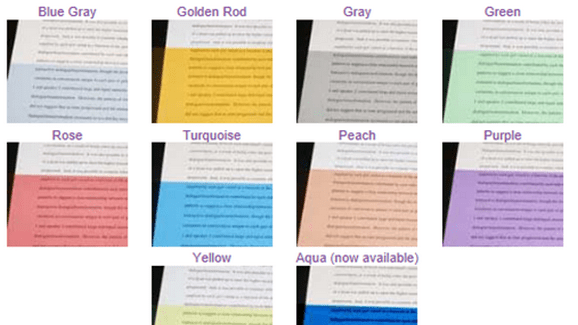
In the early 1980’s, research with learning-disabled adults disclosed a visual-perceptual processing deficit caused by light sensitivity. This subgroup has a problem in the timing by which the brain receives and processes visual information. This timing difficulty can cause distortions of print and of the environment. Altering the timing permits the visual information to be more accurately received and processed. We have found that a patented treatment method using colored overlays and colored filters worn as glasses can help correct this timing for many people.
Symptoms of Scotopic Sensitivity/Irlen Syndrome
- Light Sensitivity Discomfort or difficulty concentrating in fluorescent lighting, sunlight, bright lights, glare, and even lights at night
- Poor Depth Perception Inability to accurately judge distance or spatial relationships affecting small and gross motor performance
- Eyestrain Physical symptoms are varied and include, but are not limited to, fatigue, drowsiness, headaches, fidgeting, distractibility, and hyperactivity
- Attention Deficit Disorders Problems concentrating during tasks such as reading, computer use, and simply listening and observing
- Contrast and Color Sensitivity Problems with high contrast, such as black on white, bright colors, and busy patterns, such as stripes and polka dots
- Restricted Span Inability to read words in groups or see groups of objects in the environment together
- Inefficient Reading Problems with tracking, skipping words, skipping lines, rereading for information, and slow reading rate
- Distortions Reports of images, backgrounds, and/or print moving, fading, disappearing, swirling, sparkling, or shimmering.
Research
Over the past ten years, 27 independent research studies have raised the possibility that inadequate visual processing may be a factor in reading disabilities. The research confirms that this deficit can lead to problems with word recognition, fluency, accuracy, and comprehension. Researchers have reported that individuals do experience perceptual distortions and a restricted span of recognition.
In 1983, research into Scotopic Sensitivity/Irlen Syndrome was extended to find a method for minimizing perceptual distortions. It was found that individually tinted lenses (regular or corrective) could filter out those frequencies of the light spectrum to which the individual may be uniquely sensitive. It has been suggested that those with this disorder may have sensory register images that persist longer than those of the average reader, thus interfering with subsequent incoming printed stimuli or images. This effect has been described as a deficit in the transient visual system. Other researchers have concluded that colored filters might remove some of the medium- to high- frequency spatial information, thus restoring the relationship between the transient and sustained systems.
Irlen Colored Filters and Reading
A large number of studies have investigated the effect of colored filtering on reading achievement. While these studies have produced far more positive than negative results, findings vary. This is not uncommon with a new technique, and more effort is needed to account for a wide range of variables that can affect study results. The existing level of word attack skills, student motivation, cognitive ability, possible auditory problems or language deficits, and availability of remedial support can all influence an individual’s progress. Improved stability and visibility of the print and/or background may make reading easier, but it will not, by itself, teach reading skills to those who have not acquired them, nor can it compensate for other factors that may be negatively affecting the reading process.
Reading achievement by colored-filter users has been subject to long-term analysis. In one of several studies, of 225 subjects who had worn Irlen filters for 13 months, 57% indicated the filters were of great help, 36% some help, and 7% no help. The analysis was repeated after six years of wearing Irlen filters with similar results. Analysis has been done on the positive effect of colored filters on eye movements while reading, on visual search tasks and binocular coordination, and on reduced eyestrain from fluorescent lighting.
Conclusion
While many positive studies have been done on the use of colored filters, the contrary findings in some investigations may be a reflection of the fact that SSS is only one of many possible causal factors in reading achievement.
Improvement in visibility and stability of the print and/or background may make doing visual tasks like reading easier, more comfortable, and more efficient. But it will not allow an individual to overcome auditory processing deficits that affect reading, it will not compensate for an attention deficit disorder, and it will not overcome language processing deficits. It will not remediate other vision problems, alter brain dysfunctions not directly associated with SSS, or raise levels of intelligence. Clearly, many physiological — not to mention motivational, educational, and cultural — factors affect the acquisition of reading skills.
The discovery of SSS and treatment with colored filters specific to the individual provides us with another valuable tool to use when investigating problems of reading, learning, behavior, depth perception, and attention.
Irlen Clinics are located worldwide. In addition, over 2,000 school districts in the U.S. use the Irlen Method to screen children who are having academic difficulties and provide them with colored paper for writing and colored overlays to use over reading material. For more information regarding training, the location of Irlen Clinics, or a complete list of the studies referred to in this article, contact the Irlen Institute .